
By Coy Du, CEO of Makefay
Short answer: choose a private label makeup supplier on ten points: the real MOQ, sample quality, verified company information, compliance documents, logo and packaging options, lead time, clear trade and payment terms, communication, room to grow, and what happens when something goes wrong. Price comes after these, because a low price from a supplier who fails on any of them costs more in the end.
I am a supplier, so read this with that in mind. But these are the questions I would ask if I were on your side of the table, and the questions the best-prepared buyers ask us.
The 10-Point Checklist
| # | Check | What a good answer looks like |
|---|---|---|
| 1 | MOQ | A clear number per product, with or without logo, and whether shades can be mixed |
| 2 | Samples | Available before you order, at a stated cost and time |
| 3 | Verification | Third-party assessment, business licence, a real address, years in business |
| 4 | Compliance documents | Ingredient lists and test reports provided; help with filings for your market |
| 5 | Logo and packaging | Several logo methods, a digital proof before production, packaging options |
| 6 | Lead time | Stated production time, separate from shipping time |
| 7 | Terms | Trade term, payment methods and what the price includes, in writing |
| 8 | Communication | Specific answers, the same contact person, replies within a working day |
| 9 | Room to grow | A path from small private label orders to custom boxes and OEM |
| 10 | Problem handling | A stated process for defects, damage and shortages |
1. Ask What the MOQ Really Is
A headline “low MOQ” can mean per shade, without logo, or without the box. Ask for the MOQ per product with your logo, and whether shades can be mixed. Our guide to cosmetics MOQ lists the five questions to ask.
2. Judge the Samples, Not the Photos
A supplier’s photos show the best case. Samples show what your customers receive. Test them over several days, and check that the sample packaging is the same as the order packaging.
3. Verify the Company
| What to check | How |
|---|---|
| Legal company name and address | Ask for the business licence; compare with the invoice and bank account name |
| Third-party assessment | Ask for the report number and the name of the assessor |
| Years in business | Company registration date |
| Factory or trading company | Ask directly, and ask where production takes place |
| Evidence of the production site | Assessment video, photos, or a video call walk-through |
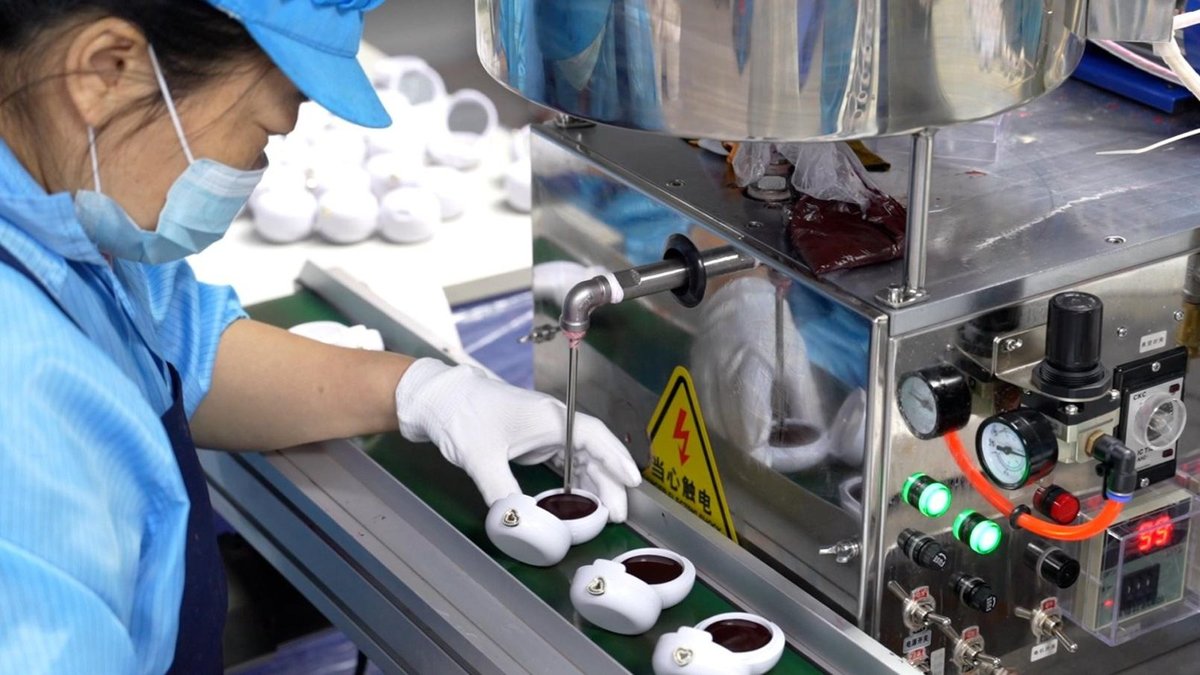
Whether a supplier is a factory or a trading company matters less than whether they tell you the truth about it. A vendor that works with partner factories can offer a wider range and lower MOQs than a single factory; a factory can offer deeper customization. For transparency: Makefay is a private label cosmetics company founded in 2014, our products are made at our own factory, and Intertek has assessed our company (report No. 498451423_T). You can see the site on our Production & Quality page.
4. Ask for Documents Before You Pay
You are legally responsible for the product in most markets, so ask for the ingredient list and the available test reports before the order, and ask whether the supplier helps with notifications such as CPNP. See selling makeup in the EU and US.
5. Look at the Logo and Packaging Options
A supplier with only one logo method limits your brand. Ask to see real examples of each method on the product you want, and insist on a digital proof. See logo printing and custom packaging.
6. Separate Production Time from Shipping Time
“Fast delivery” means little. Ask for production time and shipping time separately, and ask what happens to the date if the proof takes several rounds.
7. Get the Terms in Writing
The quote should state the trade term, the currency, the payment methods and what the price includes. Check that the bank account name matches the company name. See payment methods and our guide to shipping, trade terms and duties.
8. Test the Communication Before You Order
How a supplier answers your first five questions is how they will answer when there is a problem. Look for specific numbers instead of “no problem”, and a contact you can reach on the channel you use, whether email, WhatsApp or WeChat.
9. Check There Is Room to Grow
Changing supplier later means new samples, new shades and new packaging. Ask now what the next steps cost: custom boxes, different packaging, custom shades. See OEM services.
10. Ask What Happens When Something Goes Wrong
Ask before you order: how do I report a defect, what evidence do you need, and what do you offer, replacement or refund? A supplier who has a clear answer has dealt with it before.
Documents to Ask a Supplier For
Ask for these before you pay, and note which the supplier can issue and in whose name.
| Document | What it shows | At Makefay |
|---|---|---|
| Full ingredient list (INCI) | What goes on your label and into product listings | Available on request for each product |
| Third-party supplier assessment | That an independent body reviewed the supplier | Intertek supplier assessment, report No. 498451423_T |
| Product test reports | That a sample met a stated test | Arranged for your product on request |
| Certifications your market requires | Evidence a regulator or marketplace asks for | Arranged and filed in your company’s name; cost confirmed with your quote |
| Product notification (for example CPNP) | That the product was notified before sale | Arranged in your company’s name where your market requires it |
| Commercial invoice and packing list | What was shipped, to whom and at what value | Sent with every shipment |
| Digital logo proof | How your logo will look before production | Sent for approval before production |
| Tracking number | Where the shipment is | Provided for every shipment |
A supplier assessment is not a product certificate. See what an Intertek supplier assessment means, and compare supplier types in private label makeup suppliers compared.
Red Flags
| Red flag | Why it matters |
|---|---|
| Price far below every other quote | Formula, fill weight or packaging is likely different |
| No samples, or samples that differ from the listing | The order will differ too |
| Payment to a personal account or a different company name | Fraud risk |
| Cannot provide an ingredient list | You cannot label or register the product |
| “We can do everything” with no specifics | Promises without process |
| Pressure to pay today | A real supplier will still be there tomorrow |
| Refuses to say where products are made | Lack of transparency on the basics |
How to Compare Two or Three Suppliers
Send each supplier the same short brief: products, shades, quantity per shade, logo method, destination country and required documents. Then compare the answers in one table.
| Supplier A | Supplier B | Supplier C | |
|---|---|---|---|
| MOQ per product with logo | |||
| Sample cost and time | |||
| Production time | |||
| Trade term and what the price includes | |||
| Documents provided | |||
| Third-party verification | |||
| Reply time and clarity |
Related guides: what an Intertek supplier assessment means, how private label makeup samples work.
FAQ
How do I find a reliable private label makeup supplier?
Shortlist suppliers with a low, clearly stated MOQ, order samples, verify the company through a third-party assessment and business licence, and check that they can provide ingredient lists and the documents your market requires.
Is it better to buy from a factory or a vendor?
Both can work. A factory may offer deeper customization; a vendor working with partner factories may offer a wider product range and lower MOQs. What matters is transparency about where products are made, and verified company information.
What should I ask a makeup supplier before ordering?
Ask for the MOQ per product with your logo, sample cost and time, production time, the trade term, payment methods, available documents and test reports, and how defects are handled.
Is Makefay a manufacturer?
Yes. Makefay is a private label cosmetics company in Shenzhen, founded in 2014. Our products are made at our own factory, and our company has been assessed by Intertek (report No. 498451423_T).
How can I tell whether a supplier is a factory or a trading company?
Ask directly who makes the product and where. Check the legal name on the business licence and on the invoice, and ask whose name is on any audit or assessment report. A vendor or trading company that says so plainly is easier to trust than a supplier that avoids the question.
How do I find a makeup manufacturer for a small brand?
Decide the type of supplier first: print-on-demand platform, domestic small-batch lab, private label vendor or factory, or full OEM factory. Then compare two or three suppliers of that type on minimum order, samples, documents and reorder time.
About the author: Coy Du is the CEO of Shenzhen Makefay Cosmetics Co., Ltd., a private label cosmetics company in Shenzhen, China, founded in 2014. About Makefay.